

Bitcoin Weekly Forecast: Gearing up for a sharp move
- Bitcoin price hovers around $81,000 on Friday, up over 4% so far this week.
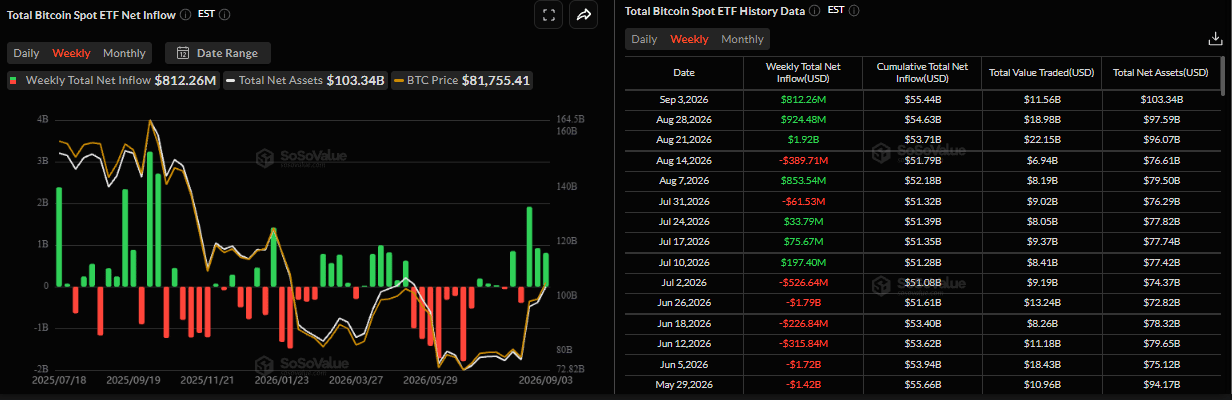
- US-listed spot Bitcoin ETFs are on track for a third straight week of inflows, with $812.26 million recorded through Thursday.
- Market participants await the US NFP report release, which could provide fresh clues on the Fed’s policy path and determine BTC’s next directional move.
Bitcoin (BTC) is trading around $81,000 on Friday, up over 4% so far this week, and awaits a key catalyst that could determine its next directional move. Strong institutional demand is supporting the bullish price action, with spot BTC Exchange Traded Funds (ETFs) on track to record a third straight week of inflows.

Meanwhile, traders are turning their attention to the US Nonfarm Payrolls (NFP) report on Friday for clues on the Federal Reserve’s (Fed) policy path, which could dictate the near-term direction of the Crypto King.
All eyes on US NFP data
Bitcoin traders are positioning for the next catalyst that could determine its next direction. The focus now shifts to US macroeconomic data, especially labor market health and its potential implications for the Fed’s monetary policy.
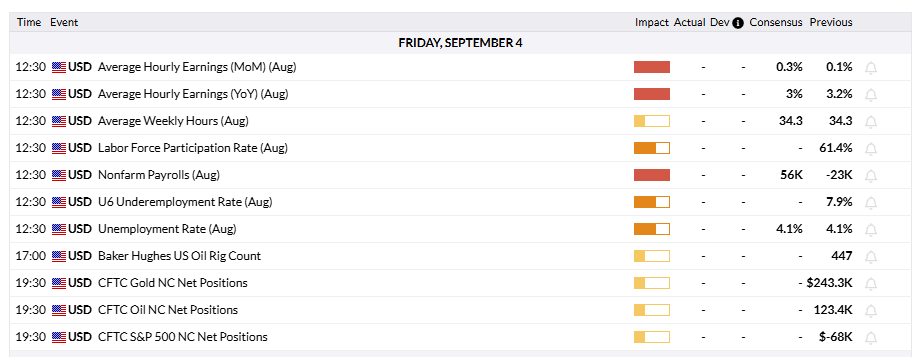
The FXStreet economic calendar below shows that August Nonfarm Payrolls are set to be released on Friday at 12:30 GMT, and the market expects a reading of 56k. The unemployment rate is expected to remain steady at 4.1%, while annual wage growth is forecast to moderate slightly to 3.0% down from 3.2%.
Ahead of the key data release, Governor Christopher Waller said Thursday that he is leaning toward keeping interest rates steady at the September 15-16 Federal Open Market Committee (FOMC) meeting, provided there are no surprises in upcoming inflation data.
Waller’s comments triggered a sharp decline in US Treasury yields and the US Dollar (USD), supporting risk assets. Bitcoin gained more than 5% on Thursday and has since stabilized around $81,000 as of Friday.
If the US NFP report comes in higher than expected, it could reinforce expectations for a September Fed rate hike, potentially pushing Treasury yields and the USD higher and weighing on the Crypto King’s price. However, a weaker-than-expected employment report could reduce the odds of an interest rate hike by the US central bank, lowering Treasury yields and the USD, and potentially provide further support and a rally in BTC.
Middle-East tensions keep inflation concerns elevated
Inflation risks stemming from higher energy prices leave the door open for a Fed rate hike later this month. The ongoing US-Iran conflict around the Strait of Hormuz has kept energy prices elevated so far this week and raised concerns about renewed inflationary pressures.
In the latest developments, Iran targeted US military bases in Kuwait and the United Arab Emirates (UAE) on Thursday. Meanwhile, US Vice President JD Vance said that US President Donald Trump has a series of options available at his disposal to deal with Tehran, including economic, military, diplomatic, and covert measures.
Adding to geopolitical tensions, South Korea is reportedly preparing to deploy military assets to support freedom of navigation in the strategic Strait of Hormuz and aims to dispatch them before the end of the year.
The developments keep a geopolitical risk premium in play, which supports crude Oil prices and might continue to support the USD, while dampening risk appetite and capping risky assets such as BTC.
Institutional demand remains strong
Institutional demand for Bitcoin supported this week’s ongoing price surge. SoSoValue data showed spot ETFs are set to record a third straight week of inflows, with $812.26 million recorded through Thursday. Renewed institutional interest reflects growing demand for BTC and supports its price outlook.
Strategy is back after weeks of silence
Michael Saylor announced on X on Monday that his firm, Strategy, acquired 4,603 BTC for $370 million after weeks of silence, bringing total BTC holdings to 845,050.
In addition, the company increased USD Cash by $29 million and repurchased $152 million of Stretch (STRC), bringing total reserves to $6.71 billion in USD Assets and Net Leverage to 0.0%. The move suggests Saylor’s company may be returning to its familiar approach of aggressively accumulating BTC after spending much of the summer strengthening its liquidity position.
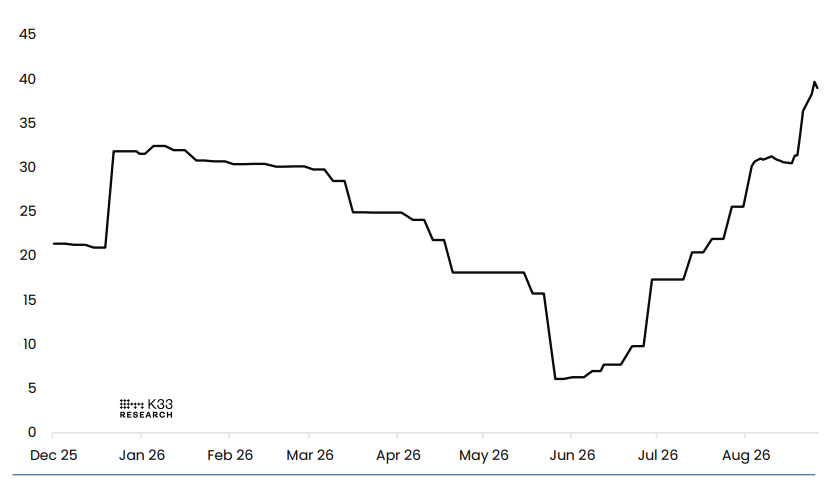
Meanwhile, Strategy’s STRC continues to struggle to reach its $100 per share value despite the company’s ongoing repurchase efforts. Currently, STRC is trading around $97; further repurchases could continue to support the preferred stock, although increased issuance or additional BTC purchases could eventually raise Strategy’s dividend burden. For now, however, the company remains in a relatively strong liquidity position, with approximately 39 months of dividend coverage, as shown in the chart below.
What’s there in September?
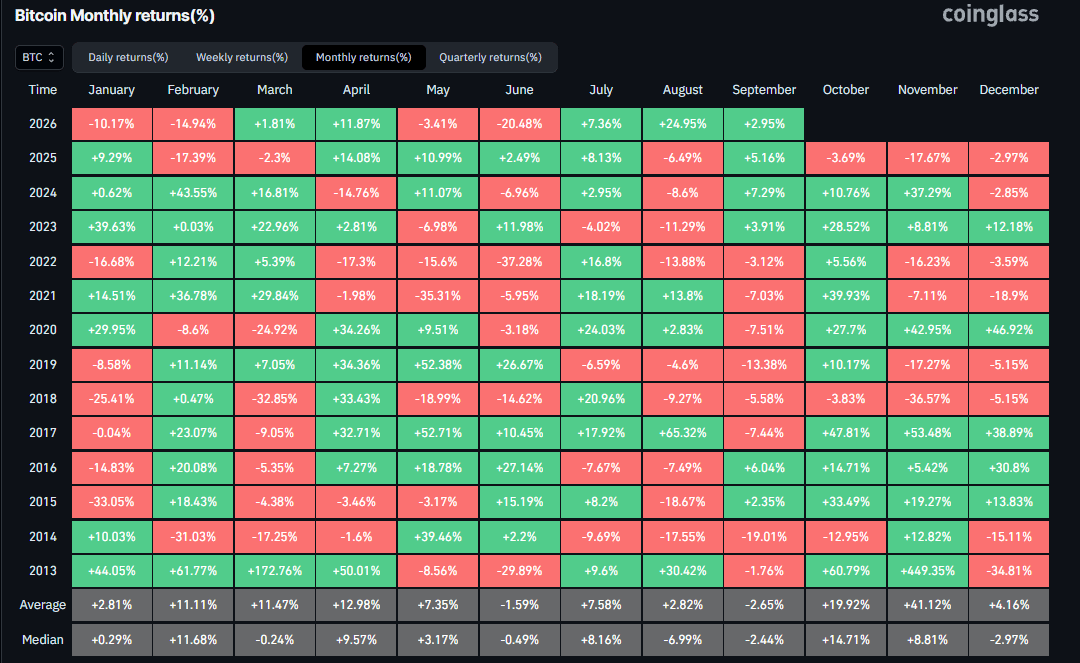
Bitcoin closed August with nearly 25% gains, its strongest monthly performance since November 2024, marking two consecutive months of positive returns. However, seasonal data below shows a cautious outlook for BTC in September, delivering average losses of -2.65%.
September begins with several key risks, such as uncertainty over the Fed’s monetary policy, and escalating geopolitical tensions between the US and Iran, all of which could shape Crypto King’s outlook.
Bitcoin technical outlook: A close above the 50-day SMA suggests further gains
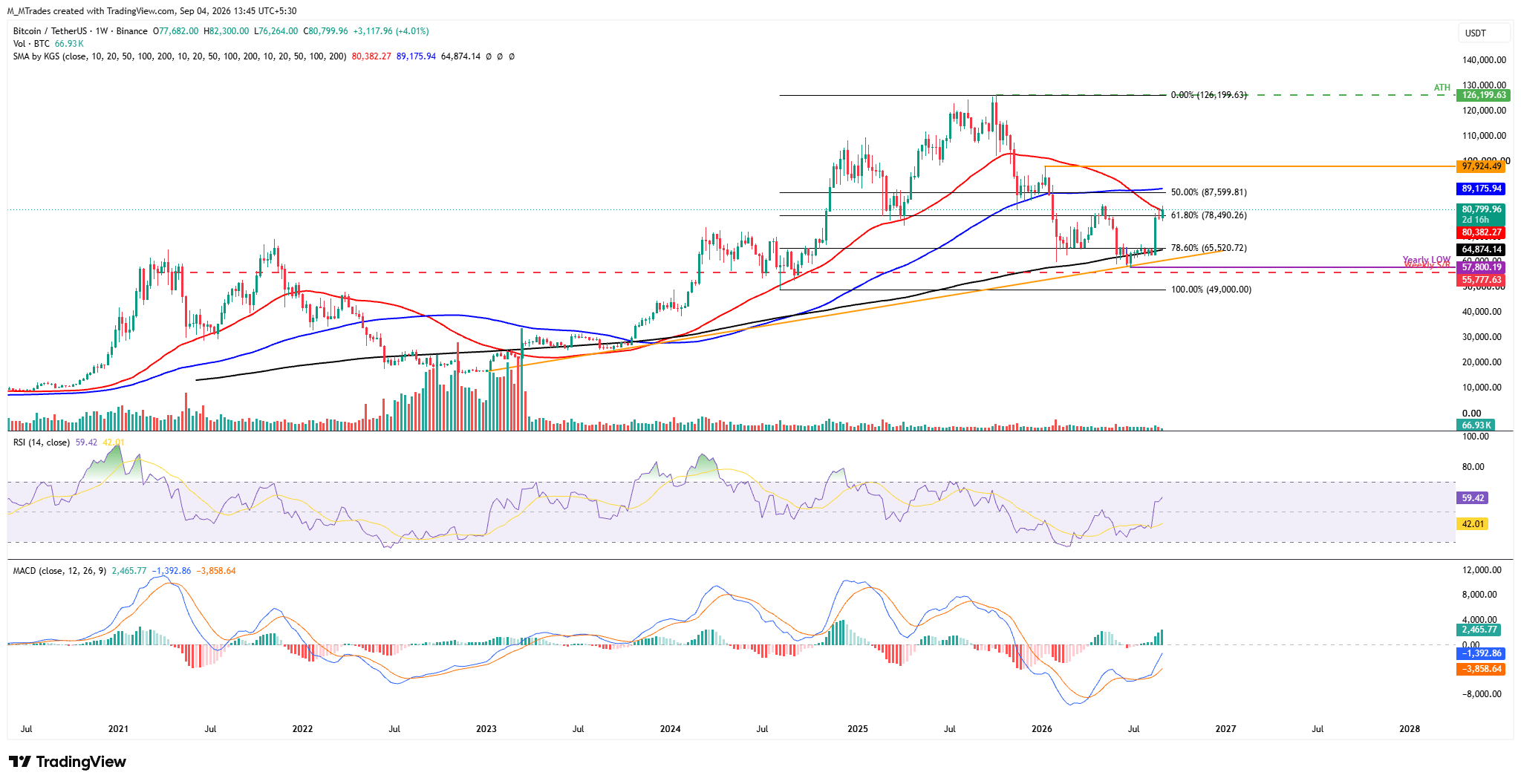
The Crypto King is trading at $80,799 at the time of writing on Friday, up over 4% so far this week and slightly above the 50-week Simple Moving Average (SMA) at $80,382.
If BTC closes above the 50-week SMA at $80,382 on a weekly basis, it could extend the rally toward the 50% retracement level at $87,599 (drawn from the August 2024 low of $49,000 to the October 2025 record high of $126,199), followed by the 100-week SMA at $89,175.
Momentum remains strong and shows signs of optimism. On the weekly chart, the Relative Strength Index (RSI) stays firmly above the neutral level of 50, reading 59 on Friday, indicating improving momentum. In addition, the Moving Average Convergence Divergence (MACD) flipped to a bullish crossover in mid-July and remains intact, with rising green histogram bars, supporting a positive outlook.
On the flip side, if BTC corrects, it could extend the decline toward the key psychological level of $70,000.
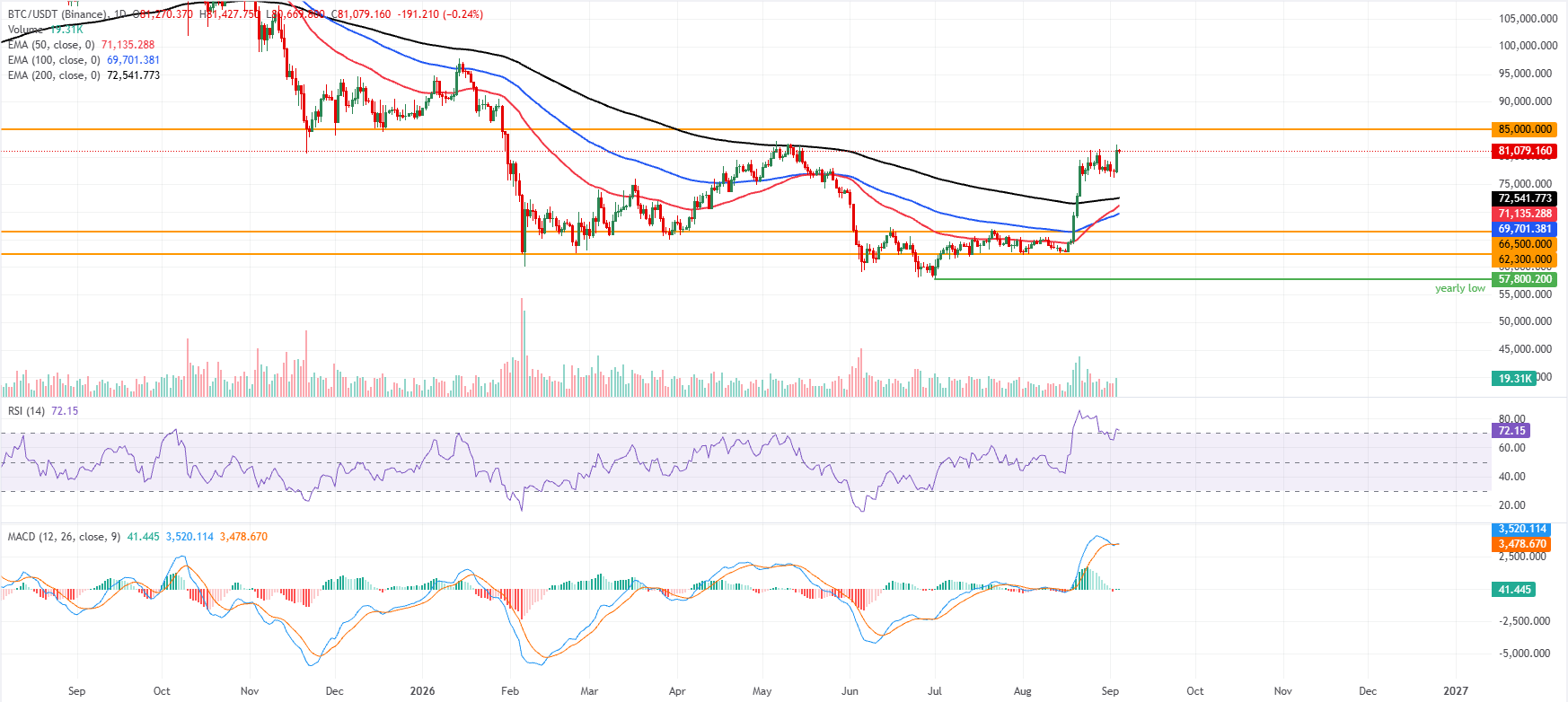
On the daily chart, BTC maintains a bullish near-term bias as price holds well above the 50-day, 100-day, and 200-day Exponential Moving Averages (EMAs) clustered between roughly $69,700 and $72,500.
The daily RSI at 72 sits in overbought territory, hinting at stretched upside momentum. At the same time, the MACD histogram remains positive, suggesting the broader advance is still intact even as upside pressure starts to moderate.
On the topside, initial resistance is seen at the horizontal barrier near $85,000, where a pause or consolidation could emerge if buyers push the Crypto King higher.
On the downside, the 200-day EMA at $72,541 forms the first significant support layer, followed by the 50-day EMA at $71,135 and the 100-day EMA at $69,701. A deeper pullback would expose horizontal support around $66,500 and then $62,300, where dip-buying interest would likely be reassessed.
(The technical analysis of this story was written with the help of an AI tool. Know more.)
Bitcoin, altcoins, stablecoins FAQs
Bitcoin is the largest cryptocurrency by market capitalization, a virtual currency designed to serve as money. This form of payment cannot be controlled by any one person, group, or entity, which eliminates the need for third-party participation during financial transactions.
Altcoins are any cryptocurrency apart from Bitcoin, but some also regard Ethereum as a non-altcoin because it is from these two cryptocurrencies that forking happens. If this is true, then Litecoin is the first altcoin, forked from the Bitcoin protocol and, therefore, an “improved” version of it.
Stablecoins are cryptocurrencies designed to have a stable price, with their value backed by a reserve of the asset it represents. To achieve this, the value of any one stablecoin is pegged to a commodity or financial instrument, such as the US Dollar (USD), with its supply regulated by an algorithm or demand. The main goal of stablecoins is to provide an on/off-ramp for investors willing to trade and invest in cryptocurrencies. Stablecoins also allow investors to store value since cryptocurrencies, in general, are subject to volatility.
Bitcoin dominance is the ratio of Bitcoin's market capitalization to the total market capitalization of all cryptocurrencies combined. It provides a clear picture of Bitcoin’s interest among investors. A high BTC dominance typically happens before and during a bull run, in which investors resort to investing in relatively stable and high market capitalization cryptocurrency like Bitcoin. A drop in BTC dominance usually means that investors are moving their capital and/or profits to altcoins in a quest for higher returns, which usually triggers an explosion of altcoin rallies.













