

Trading
Explore a wide range of markets with competitive pricing, deep liquidity, and advanced trading tools.
Learn More 
Platform
Trade seamlessly with TMGM's powerful platform, built for speed, precision, and a superior trading experience.
Learn More Trading Platform
Academy
Learn the fundamentals of trading with beginner-friendly resources, including guides, webinars, and market insights.
Learn More News & Analysis
Get real-time market updates and expert analysis to stay ahead of trading opportunities
Learn More News & Analysis
About
Learn what sets TMGM apart — our global presence, regulatory strength, and commitment to innovation in trading.
Learn More Why Choose TMGM
Sponsorship
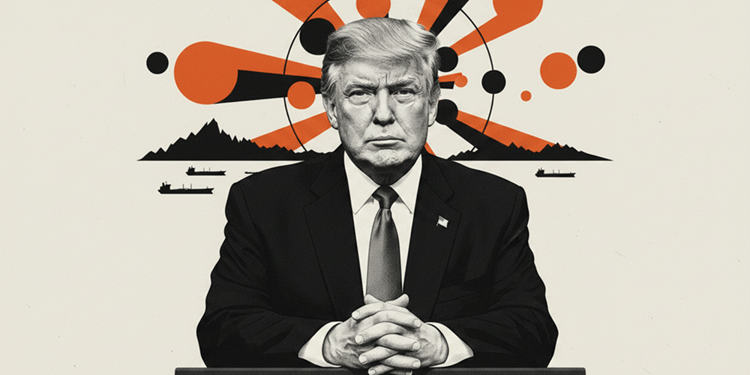
US President Trump says Iran strikes will be limited as Hormuz Oil flows
US President Donald Trump said that strikes on Iran will be limited, following a previous story reported by Axios, which said that he and his senior aides are considering waging limited strikes in Hormuz to prevent Iran from reconstituting its radar and missile capabilities to attack ships.
Trump added that the Strait of Hormuz is “in extremely good shape,” and that “a lot of il is coming out of Hormuz.”
Key highlights:
IRAN STRIKES WILL BE LIMITED
STRAIT OF HORMUZ IN EXTREMELY GOOD SHAPE
A LOT OF OIL IS COMING OUT OF HORMUZ
SHIPS CAME THROUGH HORMUZ LAST NIGHT WITH NAVY ASSIST
AVERAGING 30 SHIPS A NIGHT OUT OF HORMUZ
ON WARSH SAID THAT HE HAS TO DO WHAT HE HAS TO DO, AND THAT INTEREST RATES ARE TOO HIGH.
US Dollar Price Today
The table below shows the percentage change of US Dollar (USD) against listed major currencies today. US Dollar was the strongest against the Australian Dollar.
| USD | EUR | GBP | JPY | CAD | AUD | NZD | CHF | |
|---|---|---|---|---|---|---|---|---|
| USD | -0.29% | -0.10% | -0.19% | -0.34% | -0.03% | -0.09% | -0.16% | |
| EUR | 0.29% | 0.17% | 0.09% | -0.05% | 0.23% | 0.22% | 0.13% | |
| GBP | 0.10% | -0.17% | -0.09% | -0.23% | 0.04% | 0.03% | -0.02% | |
| JPY | 0.19% | -0.09% | 0.09% | -0.16% | 0.15% | 0.12% | 0.05% | |
| CAD | 0.34% | 0.05% | 0.23% | 0.16% | 0.32% | 0.29% | 0.21% | |
| AUD | 0.03% | -0.23% | -0.04% | -0.15% | -0.32% | -0.03% | -0.07% | |
| NZD | 0.09% | -0.22% | -0.03% | -0.12% | -0.29% | 0.03% | -0.07% | |
| CHF | 0.16% | -0.13% | 0.02% | -0.05% | -0.21% | 0.07% | 0.07% |
The heat map shows percentage changes of major currencies against each other. The base currency is picked from the left column, while the quote currency is picked from the top row. For example, if you pick the US Dollar from the left column and move along the horizontal line to the Japanese Yen, the percentage change displayed in the box will represent USD (base)/JPY (quote).
Risk sentiment FAQs
In the world of financial jargon the two widely used terms “risk-on” and “risk off'' refer to the level of risk that investors are willing to stomach during the period referenced. In a “risk-on” market, investors are optimistic about the future and more willing to buy risky assets. In a “risk-off” market investors start to ‘play it safe’ because they are worried about the future, and therefore buy less risky assets that are more certain of bringing a return, even if it is relatively modest.
Typically, during periods of “risk-on”, stock markets will rise, most commodities – except Gold – will also gain in value, since they benefit from a positive growth outlook. The currencies of nations that are heavy commodity exporters strengthen because of increased demand, and Cryptocurrencies rise. In a “risk-off” market, Bonds go up – especially major government Bonds – Gold shines, and safe-haven currencies such as the Japanese Yen, Swiss Franc and US Dollar all benefit.
The Australian Dollar (AUD), the Canadian Dollar (CAD), the New Zealand Dollar (NZD) and minor FX like the Ruble (RUB) and the South African Rand (ZAR), all tend to rise in markets that are “risk-on”. This is because the economies of these currencies are heavily reliant on commodity exports for growth, and commodities tend to rise in price during risk-on periods. This is because investors foresee greater demand for raw materials in the future due to heightened economic activity.
The major currencies that tend to rise during periods of “risk-off” are the US Dollar (USD), the Japanese Yen (JPY) and the Swiss Franc (CHF). The US Dollar, because it is the world’s reserve currency, and because in times of crisis investors buy US government debt, which is seen as safe because the largest economy in the world is unlikely to default. The Yen, from increased demand for Japanese government bonds, because a high proportion are held by domestic investors who are unlikely to dump them – even in a crisis. The Swiss Franc, because strict Swiss banking laws offer investors enhanced capital protection.
Top Articles
1Mexican Peso nears 18.75 as Iran risks and AI selloff hit sentiment2Ethereum Price Forecast: ETH dips below $2,400 as exchange reserves fall3Indonesian Rupiah: Finding footing despite MSCI risks - DBS4USD/CHF Price Forecast: Bulls defend 50-day SMA near 0.82005Chinese Yuan: Gradual gains toward 6.6640 against US Dollar – UOB6Silver Price Forecast: XAG/USD breaks $55 as bears target $507Gold slides as safe-haven demand shifts to US Treasuries despite lower yields8South Korean Won: Hawkish BoK hold supports gains against US Dollar – Societe Generale9European Central Bank: Gradual tightening points to December hike – Rabobank
LIVE QUOTES


Get Started!
Sign up and access the Global Markets in less than 3 minutes

Connect With Us












The information provided on this website is of a general nature only and does not constitute personal financial advice. Before acting on any information on this website, you should consider the suitability of the information in relation to your objectives, financial situation and needs. Investing in CFDs and FX Margin Contracts carries significant risks and is not suitable for all investors. You may lose more than your initial deposit. You do not own, or have, any interest in the underlying asset. We recommend that you seek independent advice and ensure you fully understand the risks involved before trading. It is important that you read and consider the disclosure document before you acquire any product listed on the website. The information and advertisements offered on this website are not intended for use by any person in any country or jurisdiction where such use would be contrary to local laws and regulations. The Products and Services offered on this website are not intended for residents of the United States, Malaysia and Thailand.
TMGM is authorized and regulated in various jurisdictions.
Trademax Australia Limited, trading as TMGM, is regulated by the Australian Securities and Investments Commission (ASIC), AFSL no. 436416 and is located at Level 28, One International Tower, 100 Barangaroo Avenue, 2000 Sydney, NSW Australia.
Email: [email protected]
Trademax Global Limited, trading as TMGM, is authorized and regulated by the Vanuatu Financial Services Commission (VFSC), registration number 40356 and registered at 1276, Kumul Highway, Port Vila, Vanuatu, Republic of Vanuatu.
Email: [email protected]
Trademax Global Markets (SE) Limited, trading as TMGM, is authorized and regulated by the Financial Services Authority (FSA) of Seychelles, with license number SD224. The company is registered at Office No 13, Providence Estate ABIS Centre, Mahe, Seychelles.
Email: [email protected]
Trademax Global Markets (International) Pty Ltd, trading as TMGM, is authorized and regulated by the Financial Services Commission, Mauritius (FSC) with license no. GB22201012, and registered at 33, Edith Cavell Street C/o IQ EQ Fund Services (Mauritius) Ltd Port Louis, 11324 Mauritius.
Email: [email protected]
Copyright © TMGM. All rights reserved