


Key Takeaways
The standard cup and handle is a bullish continuation pattern, not a reversal pattern.
The best structures have a rounded cup, a shallow handle, and a breakout above a clear rim resistance.
A practical trade plan starts with trend identification, then confirmation, entry, stop loss, and a measured target.
After breakout, price usually extends, retests the breakout level, or fails back into the pattern.
The setup works in forex, gold, crypto, shares, and indices, but volume is easier to read in centralized markets.
Reliability drops when the cup is too steep, the handle is too deep, or the breakout lacks a decisive close.
What Is a Cup and Handle Pattern?
A cup and handle is a continuation pattern made up of two parts: a rounded cup and a short handle that forms near the top of the structure. The cup shows a controlled consolidation and recovery, while the handle reflects a final pause before breakout. Traders use the pattern to identify breakout levels, trend continuation setups, and possible target projection across markets such as forex, shares, gold, and crypto.
The cup and handle chart pattern is most commonly used by swing traders, position traders, and technical traders who focus on structure, resistance breaks, and trade location. It is especially useful in markets where price trends cleanly and respects levels.
How to Read the Cup and Handle Pattern
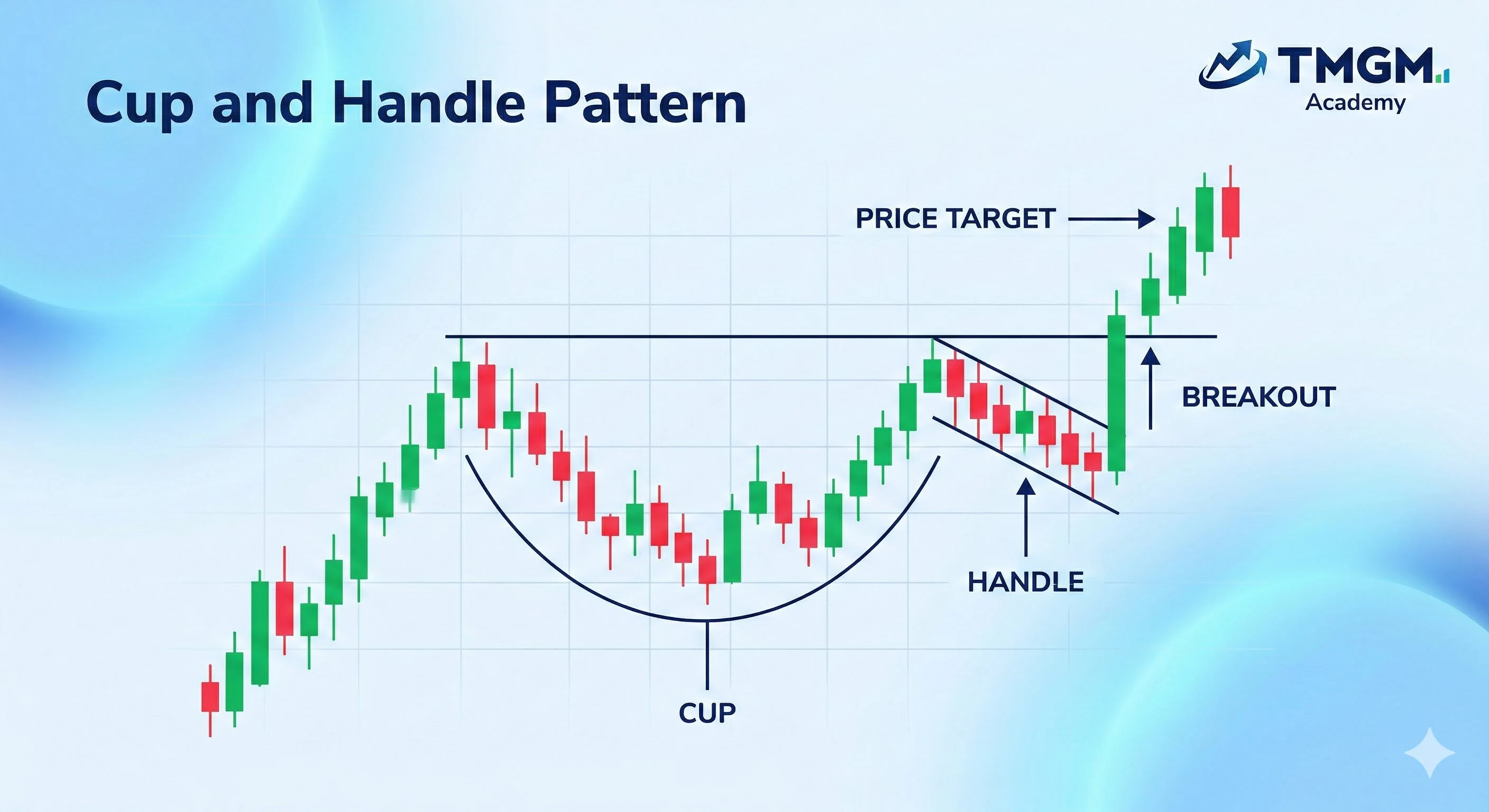
Cup: The cup is the first and rounded part of the structure. It reflects a controlled pullback and recovery rather than a sharp reversal.
Handle: The handle is a short pause near the top of the cup. It should stay in the upper half of the overall structure and remain smaller than the cup.
Duration and Depth: There is no fixed duration, but the structure should look proportionate to the chart timeframe. A very deep cup or a handle that retraces too much reduces pattern quality.
Volume: Volume often contracts through the cup and handle, then expands on the breakout. In markets where volume is less reliable, traders should focus more on price structure and breakout behavior.
Bearish Cup and Handle Variation
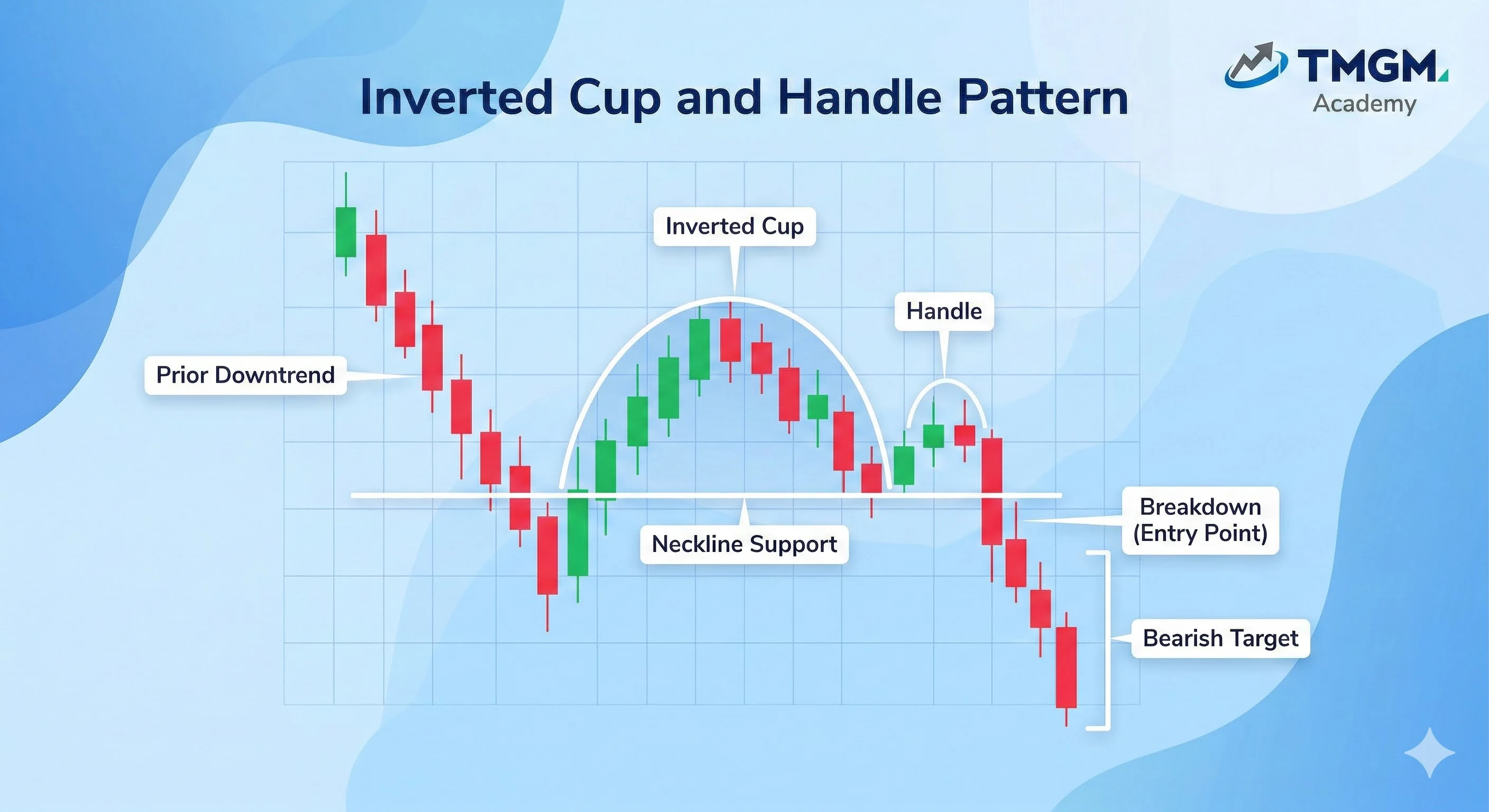 The bearish variation is the inverted cup and handle pattern, also called the reverse cup and handle pattern or bearish cup and handle pattern.
Trading Significance of the Cup and Handle Pattern
The cup and handle pattern implies that buyers remain in control even after a corrective phase. Supply gets absorbed through the cup, and the handle reflects a final pause before resistance is tested again.
The strongest setups form after a clear uptrend. Without prior trend strength, the pattern loses continuation value and becomes easier to misread as a sideways range.
How to Trade the Cup and Handle Pattern

1. Identify: Start with a real uptrend. Then look for a rounded cup, a smaller handle near the rim, and resistance that price has tested more than once.
2. Confirmation: Confirmation comes when price closes above the rim resistance. Breakout volume helps, but the closing behavior matters more than a temporary spike above the level.
❝ Important: A handle that retraces too deeply or drops below the lower half of the cup weakens the pattern before the breakout even happens.
3. Entry: A conservative entry uses the breakout close or the first controlled retest that holds above former resistance. An early entry inside the handle offers more reward, but failure risk is higher.
4. Target: A common cup and handle pattern target measures the depth of the cup and projects that distance above the breakout point. Major resistance, volatility, and time frame structure should refine the final objective.
5. Stop Loss: The most common stop sits below the handle low or below the retest low after breakout. Faster markets may need a slightly wider buffer.
6. Risk Management: Position size should be based on fixed account risk, not conviction. If the breakout extends too far before entry, traders should skip the trade rather than chasing a weak reward to risk ratio.
What Happens After a Cup and Handle Breakout?

After a valid breakout, price usually does one of three things: extend immediately, retest the breakout level, or fail back into the pattern. The best moves happen when the breakout has room above resistance and aligns with the broader trend.
A retest is not a failure by itself. It often improves structure if former resistance holds as new support, but a fast rejection back into the handle is a warning sign.
Does the Cup and Handle Pattern Work in Different Markets?
The pattern works in forex, gold, crypto, shares, and indices because it is based on price action and resistance behavior. The core logic stays the same across markets: rounded consolidation, smaller handle, then a breakout above resistance.
The difference is in confirmation quality. Shares and futures offer cleaner centralized volume. Forex relies more on price structure, session timing, and clean closes. Gold and crypto often break faster, but they also fail faster around macro news and volatility spikes.
Cup and Handle Pattern Reliability
The pattern is reliable when it forms after a real uptrend, builds a rounded cup, holds a shallow handle near the top of the structure, and breaks out with a decisive close. Reliability drops when traders force the label onto incomplete or low quality shapes.
The most common failure signs are clear. A V shaped cup is often too steep. A handle that retraces too deeply weakens continuation logic. A breakout into nearby resistance reduces upside room. A move without a clean close above the rim is not confirmed.
Traders should also avoid confusing the standard bullish pattern with the inverted cup and handle pattern. The inverted structure follows bearish logic and should not be traded with the same assumptions as the standard setup.
❝ Pro Tip: Treat volume as confirmation, not proof. In forex and some CFD markets, clean structure and breakout behavior matter more than absolute volume readings.